
Software architecture
Domain-Driven Design, clean architecture, and event-driven services on .NET 10 — the structural decisions that decide whether a system is still maintainable in year five.
Software studio · Lisbon, Portugal
What we do
We'd rather be excellent at a narrow set of problems than adequate at everything. Here's where we're worth hiring.
Domain-Driven Design, clean architecture, and event-driven services on .NET 10 — the structural decisions that decide whether a system is still maintainable in year five.
Line-of-business systems and native-feeling desktop tools for people who work offline, on locked-down networks, or with data that never leaves the building.
Azure infrastructure and Azure DevOps pipelines that a single developer can reason about at 2am — because sometimes they have to.
Unity editor extensions, shaders, and audio tools published on the Asset Store. Built for our own projects first, then hardened for everyone else's.
The toolkit
The foundation stays boring on purpose. What moves forward, moves forward — we run current .NET in production, not whatever shipped four years ago.
Selected work
Architecture and delivery for healthcare systems where downtime and bad data have consequences measured in patient care, not revenue. Event-driven .NET services over RabbitMQ, SQL Server, and Azure, held together by DDD boundaries that let the domain change without the whole system moving.
A requirements engineering workbench. Runs as an offline desktop app or as a shared web workspace with single sign-on, backed by the same data model — so an engineer on a plane and a team in the office use one tool, not two.
End-to-end development of a case and debt management platform, including Outlook add-ins that put the system where the lawyers already worked, plus the web services, database infrastructure, and reporting layer behind it.
Products
Tools built for our own projects first, then polished and published for everyone else's — on the Unity Asset Store, the Visual Studio Marketplace, and GitHub.
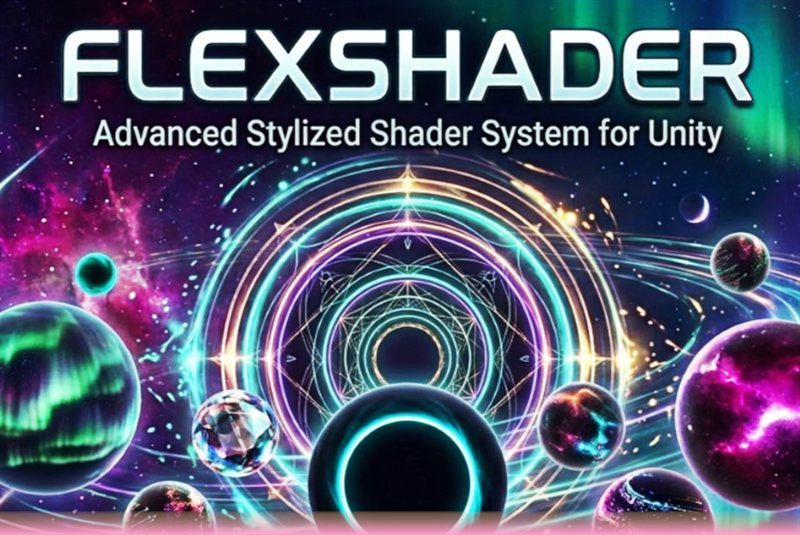
An advanced stylised shader system for Unity — configurable material effects without hand-writing HLSL for every variation.
Published on the Asset Store
Music tooling for Unity: layer, transition, and stitch tracks so a soundtrack follows what the player is actually doing.
Published on the Asset Store
Colour-coded project folders for the Unity editor. A small thing that stops a large project from becoming unnavigable.
In review
A Visual Studio extension that cleans up, reorganises, and formats code across C#, C++, XAML, JSON, HTML, CSS, JavaScript and more — on demand or on save. An open-source continuation of CodeMaid, updated for Visual Studio 2026.
Free · Open source (LGPL v3)
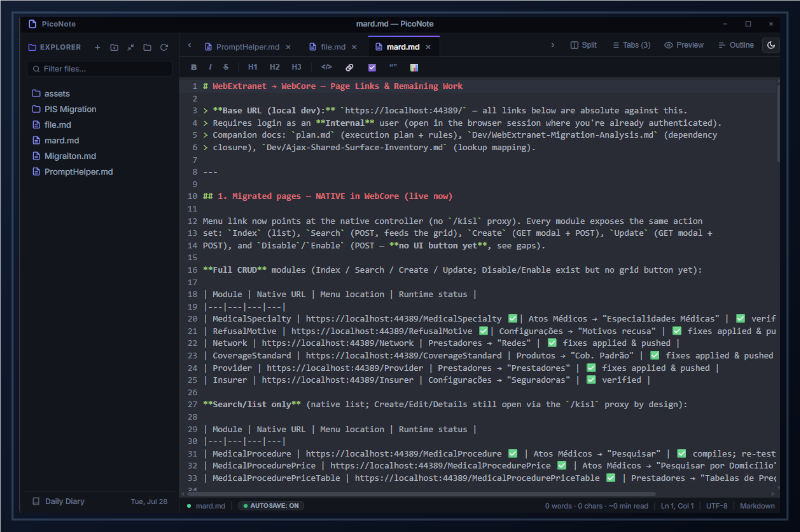
A lightweight, frameless desktop Markdown and code editor. Split-pane live preview, a tabbed workspace with pinning and colour tags, spotlight vault search, a command palette, and clipboard image paste that files attachments to disk for you. Rust handles the file system; the front end stays dependency-light on purpose.
Free · Open source · Tauri v2 & Rust
The studio
Pedro Varela on paperwork, Arctic everywhere else. I'm a software architect and Scrum Master based in Lisbon. By day I design .NET systems for healthcare — the kind where a bad deploy is a clinical problem, not a bad quarter. That work taught me to care about boundaries, correctness, and making systems legible to the next person.
Winterbite started in 2014 as a place to publish games, and it's still where everything I build outside a client contract lives: desktop tools, Unity assets, and the occasional indie project. Before all of this I spent four years in the Portuguese Army as an IT repair technician and network administration assistant — which is where the organisational habits and the unreasonable punctuality come from.
The studio model is deliberately simple: you talk to the person building the thing. No account managers relaying requirements, no discovery phase that outlives the budget. We scope something real, build it, and put it in front of users early enough that being wrong is still cheap.
Architecture for healthcare applications; leading delivery, CI/CD practice, and DDD adoption across the team.
Lawsuit and debt management platform: C#/ASP.NET services, Outlook add-ins, SQL infrastructure and reporting.
Unity game development, with titles published to Google Play and itch.io.
IT repair and network administration. Twice commended for honour and value.
Get in touch
Tell me what you're trying to do and what's currently in the way. If it's a fit I'll say so quickly — and if it isn't, I'll say that too.